
A mammogram is one of the most important screening tools available for protecting breast health and detecting breast cancer early. Whether you’re scheduling your first mammogram appointment or returning for routine breast imaging, knowing how to prepare can help you feel more comfortable and confident throughout the process.
At Complete Women’s Care of Alabama, we help women throughout Birmingham, Alabaster, Hoover, Pelham, Helena, and surrounding communities prioritize their health through professional gynecological services. Regular mammogram screening is an essential part of a proactive approach to women’s health, and understanding what to expect can help make your appointment stress-free.
According to the American Cancer Society, mammograms can often find breast cancer before symptoms develop, helping women receive treatment at earlier stages when outcomes are typically more favorable. For this reason, routine screening remains one of the most effective tools available for breast cancer detection and prevention.
If you’ve recently scheduled a mammogram or are considering breast cancer screening, this guide will walk you through everything you need to know before your visit.
Table of Contents
When to Schedule Your Mammogram, Choosing the Right Time
One of the most common questions women ask is when to schedule a mammogram. If you still have menstrual cycles, many providers recommend scheduling your mammogram during the week after your period. During this time, breast tissue is often less sensitive, making the exam more comfortable.
Women should also discuss mammogram screening recommendations with their gynecologist or OB/GYN. If you’re looking for a new provider, our guide on how to choose a gynecologist can help you understand what to look for in a women’s healthcare provider. Factors such as age, family history, personal health history, and breast cancer risk can all influence when screening should begin and how frequently mammograms should be performed.
A screening mammogram is recommended for many women as part of routine preventive care, even when no symptoms are present. If you notice changes in your breast tissue, such as a lump, nipple discharge, skin changes, or persistent pain, your provider may recommend diagnostic breast imaging rather than a routine screening mammogram.
For women throughout Birmingham and Alabaster, regular mammogram screening remains one of the most effective ways to support breast health and identify concerns as early as possible.
Mammogram Prep Checklist
Preparing for your mammogram appointment is simple, but following a few guidelines can help ensure accurate breast imaging results.
- Wear a two-piece outfit for convenience.
- Shower as you normally would.
- Avoid deodorant, lotion, perfume, powder, or creams on your breasts or underarms.
- Bring information about previous mammograms if they were performed elsewhere.
- Notify the clinic if you are pregnant or breastfeeding.
- Arrive early to complete any required paperwork.
Many patients ask why deodorant isn’t allowed before a mammogram. According to Breastcancer.org, deodorants, powders, and certain personal care products can contain particles that may appear on imaging and resemble calcifications, potentially requiring additional imaging to clarify the results.
If you’ve had previous mammograms at another imaging center, bringing those records allows radiologists to compare changes in breast tissue over time. This comparison can improve the accuracy of your screening mammogram.
Quick Mammogram Preparation Checklist
| Preparation Step | What To Do | Why It Matters |
|---|---|---|
| Schedule Your Mammogram | Choose a time when your breasts are least tender | May improve comfort during compression |
| Wear a Two-Piece Outfit | Wear separate top and bottom garments | Makes changing easier before breast imaging |
| Avoid Deodorant & Lotion | Do not apply products to breasts or underarms | Prevents imaging artifacts from appearing on a mammogram |
| Bring Previous Mammograms | Provide imaging records when available | Allows radiologists to compare breast tissue changes over time |
| Arrive Early | Allow time for paperwork and check-in | Reduces stress before your mammogram appointment |
| Discuss Concerns | Tell your provider about symptoms or family history | Supports personalized screening recommendations |
What to Expect During a Mammogram
Understanding the mammogram process can help ease anxiety before your appointment.
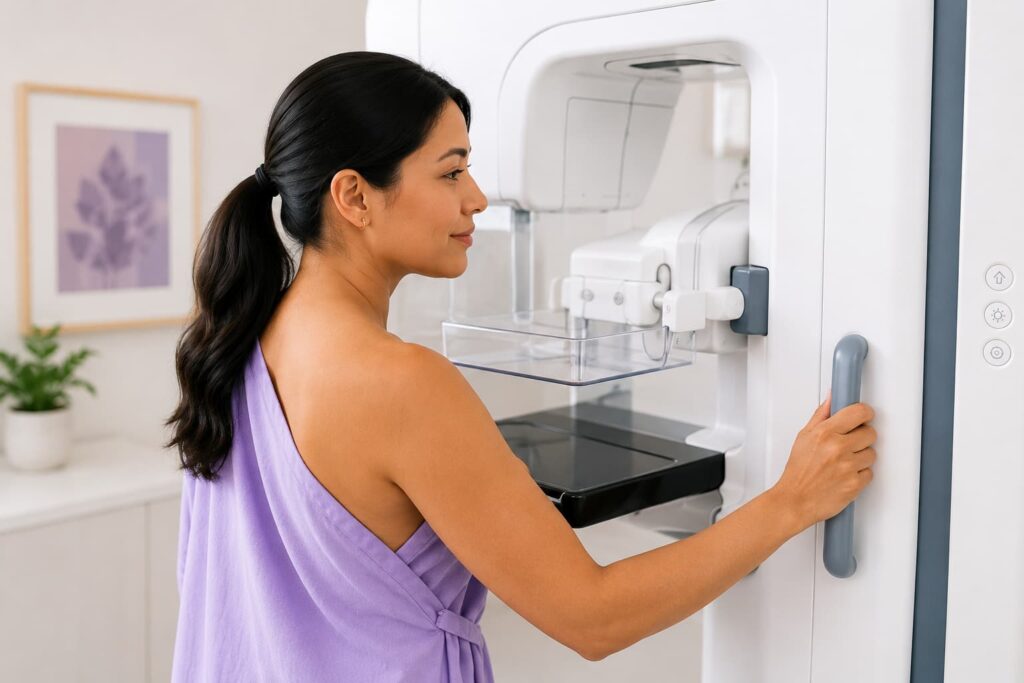
When you arrive at the clinic, a trained mammogram technologist will explain the procedure and answer any questions. During the exam, each breast is positioned on a specialized imaging machine that captures detailed images of the breast tissue.
To obtain the clearest images possible, the machine briefly compresses the breast. While compression may cause temporary discomfort, it plays a critical role in producing high-quality breast imaging and improving the accuracy of screening.
- Reduce movement during imaging
- Improve image quality
- Spread breast tissue evenly
- Allow radiologists to identify abnormalities more effectively
Most mammogram appointments take approximately 20 to 30 minutes from check-in to completion, while the actual imaging process often lasts only a few minutes.
Today’s advanced breast imaging technology allows providers to evaluate breast tissue with exceptional detail, helping identify changes that may require additional testing or follow-up care.
Tips to Make Your Mammogram Screening More Comfortable
It’s normal to feel nervous before a mammogram, especially if it’s your first screening. Fortunately, there are several ways to improve your comfort during the exam.
- Schedule your appointment when your breasts are least tender.
- Wear comfortable clothing.
- Avoid caffeine if it increases breast sensitivity.
- Practice relaxation techniques before your visit.
- Communicate openly with your mammogram technologist.
Many women worry that a mammogram will be painful. While every patient experiences compression differently, most women report only brief discomfort. The few seconds of compression can provide valuable information that supports early breast cancer detection and better long-term outcomes.
Screening Mammogram vs. Diagnostic Mammogram
| Screening Mammogram | Diagnostic Mammogram |
|---|---|
| Routine Screening Used as part of preventive breast health care |
Follow-Up Testing Used to investigate a specific concern |
| Recommended for women without symptoms | Ordered when symptoms or abnormalities are present |
| Helps detect breast cancer early | Evaluates a lump, pain, discharge, or imaging finding |
| Usually completed during routine screening visits | May require additional breast imaging views |
Understanding Dense Breast Tissue and Additional Breast Imaging
Dense breast tissue is a common finding and does not necessarily indicate a health problem. However, dense breast tissue can make it more difficult to detect abnormalities on a mammogram because both dense tissue and potential abnormalities appear white on imaging.
The American Cancer Society notes that dense breasts are common and may increase the likelihood that additional breast imaging will be recommended. If you’re receiving follow-up imaging after a mammogram, you may also find our guide to mammogram results explained helpful for understanding common findings and recommendations.
- Breast ultrasound
- Diagnostic mammograms
- Additional imaging studies when appropriate
If your mammogram report indicates dense breast tissue, your provider will discuss whether additional screening is appropriate for your situation.
Why Regular Mammograms Are Important for Women’s Health
Routine mammogram screening plays a critical role in preventive women’s health care. Mammograms can identify breast cancer in its earliest stages, often before symptoms become noticeable.
According to the American Cancer Society, regular screening mammograms help detect breast cancer earlier, which can improve treatment options and outcomes. For many women, Annual well-woman exams provide an opportunity to discuss breast health, reproductive health, menstrual concerns, and other topics such as signs of a healthy menstrual cycle, birth control options, and menopause symptoms. provide an opportunity to discuss breast health concerns with a trusted gynecologist and develop a personalized screening plan.
- Earlier detection of breast cancer
- More treatment options
- Improved outcomes
- Greater peace of mind
At Complete Women’s Care of Alabama, our providers work closely with patients throughout Birmingham and Alabaster to create individualized screening recommendations based on age, family history, and overall health.
Understanding Mammogram Screening Guidelines
One reason women often feel confused about mammogram screening is that different medical organizations provide slightly different recommendations. While the exact timing may vary, most experts agree that regular screening mammograms are an important part of preventive breast health care.
| Organization | General Screening Recommendation |
|---|---|
| American Cancer Society | Women ages 45 to 54 should receive annual mammograms, with the option to begin screening earlier based on personal preference and risk factors. |
| U.S. Preventive Services Task Force | Recommends routine mammogram screening every other year beginning at age 40 for average-risk women. |
| American College of Obstetricians and Gynecologists | Encourages shared decision-making between patients and providers regarding screening frequency and starting age. |
Because every woman has different risk factors, your gynecologist can help determine which screening schedule is most appropriate for your health history and goals through comprehensive professional gynecological services. for your health history and goals.
Family History and Breast Cancer Risk Factors
Family history is one of the most important factors providers consider when making mammogram screening recommendations. Women with a parent, sibling, or child who has been diagnosed with breast cancer may benefit from earlier or more frequent screening.
Other factors that may affect breast cancer risk include:
- Known BRCA1 or BRCA2 gene mutations
- A strong family history of breast or ovarian cancer
- Previous chest radiation treatment
- Personal history of breast cancer
- Dense breast tissue combined with other risk factors
What Happens If You Have Dense Breasts?
Learning that you have dense breast tissue after a mammogram can feel concerning, but it is a common finding. Dense breasts are not abnormal, but they can make certain findings more difficult to see on standard mammogram images.
Depending on your risk factors and mammogram results, your provider may discuss additional breast imaging options such as:
| Additional Imaging Option | When It May Be Recommended |
|---|---|
| Breast Ultrasound | May provide additional evaluation of dense breast tissue. |
| Diagnostic Mammogram | Used when an area requires closer examination. |
| Breast MRI | May be considered for women with elevated breast cancer risk. |
Your provider will recommend follow-up imaging only when it is appropriate based on your individual situation and screening results.
Questions to Ask Your Provider Before a Mammogram
If you’re preparing for your mammogram appointment, consider discussing these questions with your gynecologist or women’s health provider:
- When should I begin regular mammogram screening?
- How often should I have a mammogram?
- Do I have any risk factors that require earlier screening?
- Do I have dense breast tissue?
- Should I consider additional breast imaging?
- What symptoms should I monitor between screenings?
- How will I receive my mammogram results?
Having these conversations can help you feel more informed and confident about your breast health decisions.
Common Mammogram Preparation Mistakes to Avoid
Most mammogram appointments go smoothly, but there are a few common mistakes that can make the process more stressful or affect image quality.
| Common Mistake | Why It Matters |
|---|---|
| Wearing deodorant, lotion, or powder | May create artifacts that appear on imaging. |
| Forgetting previous mammogram records | Limits the ability to compare changes over time. |
| Scheduling during a period of breast tenderness | Can make compression more uncomfortable. |
| Not mentioning symptoms | May prevent your provider from recommending appropriate diagnostic imaging. |
| Waiting to ask questions | Can increase anxiety and uncertainty before screening. |
Schedule Your Screening Mammogram at Complete Women’s Care of Alabama
Women throughout Birmingham, Alabaster, and nearby communities trust Complete Women’s Care of Alabama for compassionate, patient-centered women’s health care.
Our team is committed to helping every patient feel comfortable and informed throughout the screening process. From annual well-woman visits and gynecological care to mammogram screening and breast health services, we provide comprehensive support for women at every stage of life.
If you’re due for a screening mammogram or have questions about breast imaging, our providers are here to help. We encourage women to take a proactive approach to prevention and schedule recommended screenings as part of their ongoing health care plan.
Schedule a Visit
Frequently Asked Questions About Mammograms
Can I drink coffee before a mammogram?
Many women can safely drink coffee before a mammogram. However, if caffeine tends to increase breast tenderness, you may wish to limit it for a day or two before your appointment.
Should I shave before a mammogram?
Shaving is a personal preference and is not required for mammogram screening.
What if I have breast implants?
Women with breast implants should inform the imaging center before their appointment. Additional images may be needed to ensure all breast tissue can be evaluated.
How soon will I receive my results?
Many patients receive results within several days, although timing can vary depending on the facility and whether additional imaging is needed.
If you’ve already received your report and have questions about the findings, our guide to mammogram results explained can help you understand common terminology and next steps.
Can I have a mammogram while breastfeeding?
In many cases, yes. Let your provider know if you are breastfeeding so they can provide personalized guidance.
What Does It Mean If I’m Called Back After My Mammogram?
Receiving a callback after a mammogram can feel stressful, but it does not necessarily mean cancer was found. Additional imaging may be recommended if the radiologist needs a closer look at an area of breast tissue or if previous mammograms are unavailable for comparison.
Many callback appointments result in normal findings, cysts, dense breast tissue evaluations, or other noncancerous explanations.